Our scienceIngredient focus
Creatine and cell hydration
Creatine is best known for strength. It is also an osmolyte, and studies have measured what it does to the water in your body.
Most people know creatine as a strength supplement, which is where the headlines have always been. Inside a muscle cell, it is also one of the body's water-attracting molecules. HydroSure is built around the same biology.
Creatine is an osmolyte, so water tends to follow it in
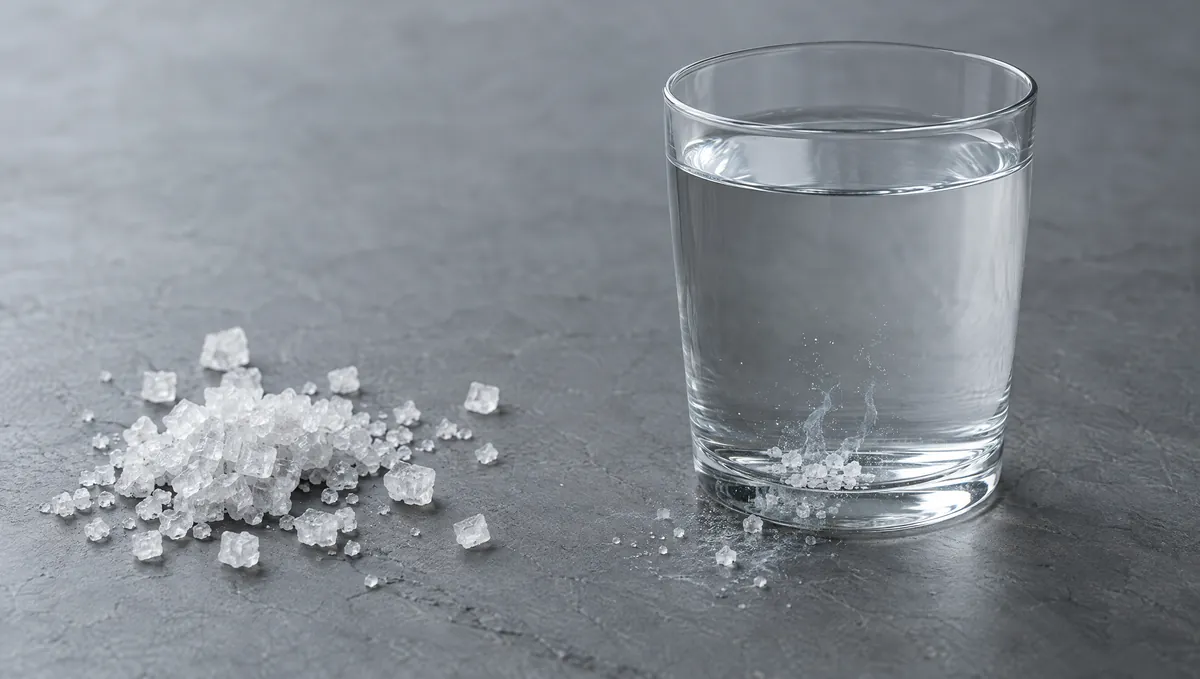
An osmolyte is a small dissolved molecule that is "osmotically active," meaning it attracts water. Wherever an osmolyte concentrates, water tends to move to balance things out. Salt does this, and so do a number of compounds that your cells make and store on purpose.
Creatine is one of them. Muscle cells pull creatine in through a dedicated transporter called SLC6A8, which uses sodium and chloride to move creatine against a steep gradient and concentrate it inside the cell (Yuan et al., 2025). Roughly 95% of the creatine in your body is stored inside skeletal muscle (Kreider et al., 2017). Because creatine is osmotically active, water tends to follow it into the muscle cell as it concentrates there (Antonio et al., 2021).
Where the water goes
People who gain a little weight in their first week on creatine often assume it's "water bloat" sitting under the skin. Measurements of body water give a more precise picture.
Researchers can estimate where body water sits using dilution methods, with tracers such as deuterium oxide and sodium bromide. Intracellular water is the water inside cells. Extracellular water is the water outside them, including the fluid just under the skin. A controlled study of 32 resistance-trained men and women used these methods. The creatine group took 25 g a day for a week, then 5 g a day for three weeks, and its total body water rose. The added water distributed in normal proportions, with roughly the usual share inside cells and the rest in the fluid around them. The study concluded that creatine increases total body water without shifting the normal balance between those compartments (Powers et al., 2003).
This cuts against the scary version of the story, in which creatine pulls water out of your bloodstream and crams it into your muscles. The data show total body water going up while the normal split between water inside and outside cells stays the same. The study did not find water moving preferentially into cells, and it measured water across the whole body, not in muscle alone. A smaller study used MR scans of forearm muscle after 5 days at 20 g a day. In people whose muscle creatine rose, it found changes consistent with more water inside the muscle cells (Saab et al., 2002).
Both studies started with five to seven days of high doses. A 2021 review concluded that creatine's water gain is mostly short-term and mostly inside cells, and that over longer periods several studies found no change in body water relative to muscle mass (Antonio et al., 2021).
Cell swelling as a signal
A well-hydrated, slightly fuller cell may also differ in its metabolism. Classic research proposed that cell swelling acts as an anabolic, pro-synthesis signal, while cell shrinkage is catabolic (Häussinger et al., 1993). Anabolic means tilted toward building and maintaining. Catabolic means tilted toward breaking down.
Two qualifiers apply. This work was developed largely in the liver and in disease physiology, so it is best read as a plausible mechanism rather than a proven effect in healthy people. And on its own, it does not promise muscle growth.
Why HydroSure pairs creatine with other osmolytes
Many other molecules attract water the way creatine does. Cells accumulate a family of benign "compatible osmolytes," such as taurine, betaine, and inositol in mammals, and glycine and proline in shallow-water shellfish. They use them to regulate their own volume without disrupting normal function (Burg & Ferraris, 2008). In human cells grown in the lab, neutral amino acids such as glutamine, glycine, and alanine play the same role when the surrounding fluid becomes more concentrated (Franchi-Gazzola et al., 2006). That peer-reviewed work is the basis for pairing creatine with amino-acid osmolytes in HydroSure.
HydroSure pairs 5 g of creatine, which helps muscle cells hold water,* with five amino-acid osmolytes: alanine, taurine, glycine, glutamine, and betaine. At 5 g a day without a high-dose week, muscle creatine stores build over about 3 to 4 weeks (Kreider et al., 2017).
*These statements have not been evaluated by the Food and Drug Administration. This product is not intended to diagnose, treat, cure, or prevent any disease.
HydroSure is not an electrolyte formula, and it contains no stimulants. If you're training long or in the heat, get electrolytes from food or a separate product.
The body-water measurements above come from creatine studies. The case for the other osmolytes rests on cell biology, and no study has tested whether taking them as a supplement changes the water in your cells.
Clearing up an old creatine worry
A long-standing worry holds that creatine supplementation causes dehydration or muscle cramping. A 2021 review by researchers from the International Society of Sports Nutrition concluded that the available scientific evidence does not support that idea (Antonio et al., 2021). This is a finding about the safety of creatine, not a claim of any benefit.
The bottom line
Creatine is an osmolyte that muscle cells concentrate from the blood. In human studies it raised total body water while keeping the normal balance between water inside and outside cells, mostly in the first days of high-dose use. HydroSure pairs 5 g of creatine with amino-acid osmolytes that cells also use to manage their volume.
References
- Powers ME et al., "Creatine Supplementation Increases Total Body Water Without Altering Fluid Distribution," Journal of Athletic Training, 2003. pmc.ncbi.nlm.nih.gov
- Häussinger D, Roth E, Lang F, Gerok W, "Cellular hydration state: an important determinant of protein catabolism in health and disease," The Lancet, 1993. pubmed.ncbi.nlm.nih.gov
- Antonio J et al., "Common questions and misconceptions about creatine supplementation: what does the scientific evidence really show?", Journal of the International Society of Sports Nutrition, 2021. pmc.ncbi.nlm.nih.gov
- Yuan X, Yin J, Liu C, et al., "Structural insights into the substrate uptake and inhibition of the human creatine transporter (hCRT)," PNAS, 2025. pmc.ncbi.nlm.nih.gov
- Burg MB & Ferraris JD, "Intracellular Organic Osmolytes: Function and Regulation," Journal of Biological Chemistry, 2008. pmc.ncbi.nlm.nih.gov
- Kreider RB et al., "International Society of Sports Nutrition position stand: safety and efficacy of creatine supplementation in exercise, sport, and medicine," Journal of the International Society of Sports Nutrition, 2017. pmc.ncbi.nlm.nih.gov
- Saab G et al., "Changes in human muscle transverse relaxation following short-term creatine supplementation," Experimental Physiology, 2002. pubmed.ncbi.nlm.nih.gov
- Franchi-Gazzola R et al., "The role of the neutral amino acid transporter SNAT2 in cell volume regulation," Acta Physiologica, 2006. pubmed.ncbi.nlm.nih.gov