Our scienceFoundations
What osmolytes are and how cells use them
Cells manage their own water and volume with a family of small molecules called osmolytes.
Most of us picture hydration as topping off a tank. The body manages water more precisely than that, and some of the most interesting work happens inside individual cells. Cells have an ancient way of managing their water and volume, using small molecules called osmolytes. "Cellular hydration" refers to this piece of cell biology.
What an osmolyte is
An osmolyte is a small, water-friendly molecule that a cell actively accumulates to manage its own water and volume. Cells regulate how much they hold, which helps them stay the right size and keep enough water on board.
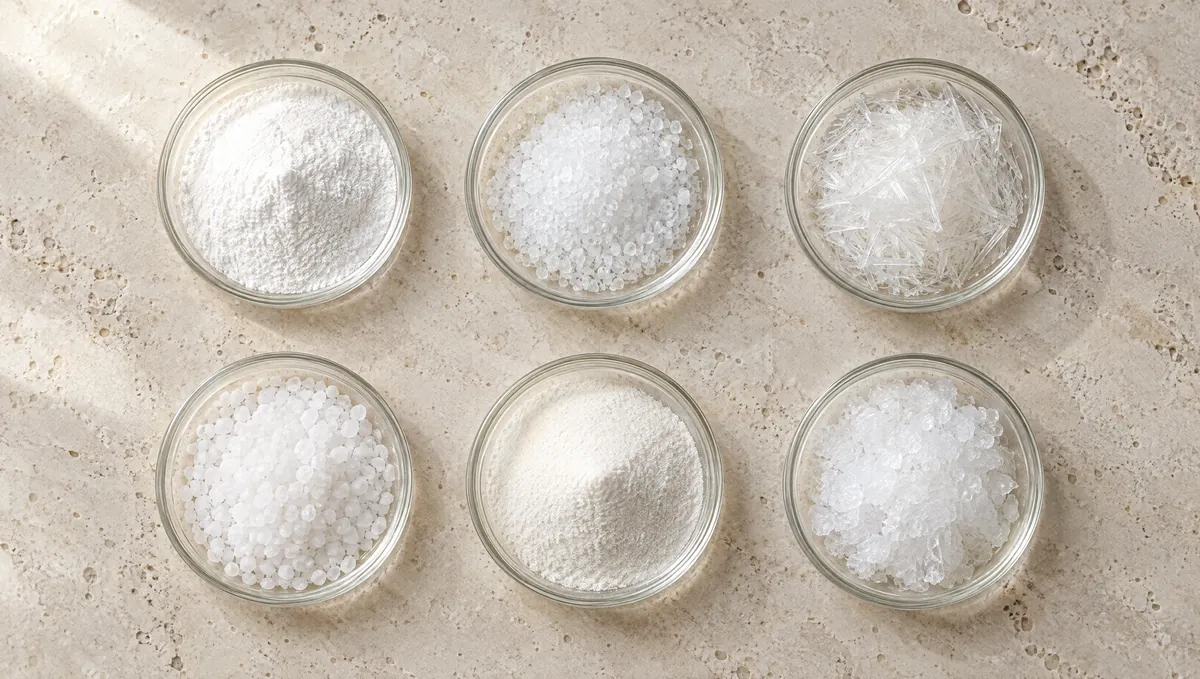
Osmolytes come in a few main families (Yancey 2005; Burg & Ferraris 2008). There are amino acids and their close relatives. Taurine is a major one in mammals, and in shallow-water shellfish, glycine and alanine are among the most abundant (Burg & Ferraris 2008). In human cells grown in the lab, glutamine, glycine, and alanine act as osmolytes when the surrounding fluid becomes more concentrated (Franchi-Gazzola et al. 2006). There are methylamines, the best known of which is betaine (also called trimethylglycine or glycine betaine, all the same molecule). And there are polyols and sugars such as sorbitol, myo-inositol, and trehalose. Creatine is one of the main osmolytes in the brain (Burg & Ferraris 2008). Though their structures differ, they all let a cell build up its internal particle count, and so keep its volume, without the harm that extra salt would do (Burg & Ferraris 2008).
Water moves toward wherever there are more dissolved particles. To hold water inside, a cell has to keep its internal particle count up, and osmolytes let it do that safely.
Why cells don't pack in more salt
If the goal is more dissolved particles inside the cell, salts such as sodium, potassium, and chloride might seem the obvious choice. At high concentrations, though, salt is hard on the cell's proteins. Pack too many of those charged ions into a cell and they distort proteins, disrupt charge interactions, and interfere with the enzymes that keep the cell running (Yancey 2005). The cell would hold more water but lose function.
Organic osmolytes avoid that problem. They are described as "compatible" solutes, meaning they raise the cell's water-holding pull without interfering with the proteins and enzymes around them. The cell can keep its internal salt at safe, normal levels and still hold plenty of water. The biophysics behind this is called preferential exclusion, or the "osmophobic effect." These molecules tend to be excluded from the layer of water right around a protein, which nudges the protein to stay compact and correctly folded (Yancey 2005). So osmolytes also tend to help proteins keep their shape. That is a big part of why a cell can stockpile them at high concentrations without the problems that salt would bring.
Your kidneys do this every day
The kidney medulla, the inner region of the kidney, routinely sits in an extremely salty, concentrated environment, because that is what it takes to concentrate urine. You would expect cells in that setting to shrivel.
They don't, because they fill themselves with organic osmolytes. Betaine, myo-inositol, sorbitol, glycerophosphocholine, and free amino acids are pulled in by dedicated transporters or made inside the cell (Beck, Burger-Kentischer & Müller 1998; Burg & Ferraris 2008). This is the osmolyte strategy at work in healthy human tissue. It is an example from normal physiology, and we make no claim from it about kidney health or any condition.
Cells also adjust in real time. When a cell swells, it releases osmolytes and ions to shed water. When it shrinks, it takes in ions first, then accumulates organic osmolytes as the safe, longer-term way to restore its volume (Burg & Ferraris 2008).
A closer look at taurine and betaine
Two osmolytes are worth singling out, because they show up both in food and in your tissues.
Taurine is one of the most abundant free amino acids in mammalian tissues, and it is an osmolyte involved in cell water and volume balance. Its intracellular concentration runs roughly 5 to 20 µmol per gram of wet weight in many tissues, especially excitable ones such as skeletal muscle, heart, and brain. Taurine is about 100-fold more concentrated in tissue than in plasma. Cells build up that level with a dedicated sodium- and chloride-dependent transporter called TauT (SLC6A6) (De Luca, Pierno & Conte Camerino 2015). These figures describe normal tissue biology and say nothing about what a supplement produces.
Betaine (trimethylglycine) is a major cellular osmolyte that helps regulate cell volume. It also plays a role in metabolism as a methyl donor, helping remethylate homocysteine to methionine. It comes from the diet or from the oxidation of choline (Lever & Slow 2010; Yancey 2005).
HydroSure combines creatine with five amino-acid osmolytes: taurine, glycine, glutamine, alanine, and betaine. Whether taking these osmolytes as a supplement changes the water inside your cells has not been tested in healthy people. HydroSure is not an electrolyte formula, so if you're training long or in the heat, get electrolytes from food or a separate product.
One of biology's oldest strategies
The compatible-solute strategy goes well beyond the human body. It is one of the oldest and most conserved solutions in biology, found across bacteria, archaea, and animals. Glycine betaine is one of the most widely used compatible solutes in nature, and microbes rely on molecules such as trehalose and ectoine to cope with osmotic stress (Yancey 2005). HydroSure is built on that biology, and the betaine in it is the same molecule.
The bottom line
Hydration depends on how much water you drink and on whether your cells can hold onto it. Osmolytes are small molecules that help with the second part, raising a cell's water-holding pull while leaving its proteins and enzymes free to work. This is well-established cell biology, and it is the same strategy cells use in the saltiest parts of the body.
The osmolyte mechanism described here is solid, textbook science. Whether any finished supplement measurably changes intracellular hydration in healthy people is a separate question, and the cell-biology literature cited here doesn't answer it. We present this as the rationale behind HydroSure's ingredients, and we don't promise a specific outcome.
References
- Yancey PH. "Organic osmolytes as compatible, metabolic and counteracting cytoprotectants in high osmolarity and other stresses." Journal of Experimental Biology, 2005, 208(15):2819-2830. journals.biologists.com
- Burg MB & Ferraris JD. "Intracellular Organic Osmolytes: Function and Regulation." Journal of Biological Chemistry, 2008, 283(12):7309-7313. pmc.ncbi.nlm.nih.gov
- Beck FX, Burger-Kentischer A & Müller E. "Cellular response to osmotic stress in the renal medulla." Pflügers Archiv (European Journal of Physiology), 1998. pubmed.ncbi.nlm.nih.gov
- De Luca A, Pierno S & Conte Camerino D. "Taurine: the appeal of a safe amino acid for skeletal muscle disorders." Journal of Translational Medicine, 2015, 13:243. pmc.ncbi.nlm.nih.gov
- Lever M & Slow S. "The clinical significance of betaine, an osmolyte with a key role in methyl group metabolism." Clinical Biochemistry, 2010, 43(9):732-744. pubmed.ncbi.nlm.nih.gov
- Franchi-Gazzola R, Dall'Asta V, Sala R, et al. "The role of the neutral amino acid transporter SNAT2 in cell volume regulation." Acta Physiologica, 2006, 187(1-2):273-283. pubmed.ncbi.nlm.nih.gov